
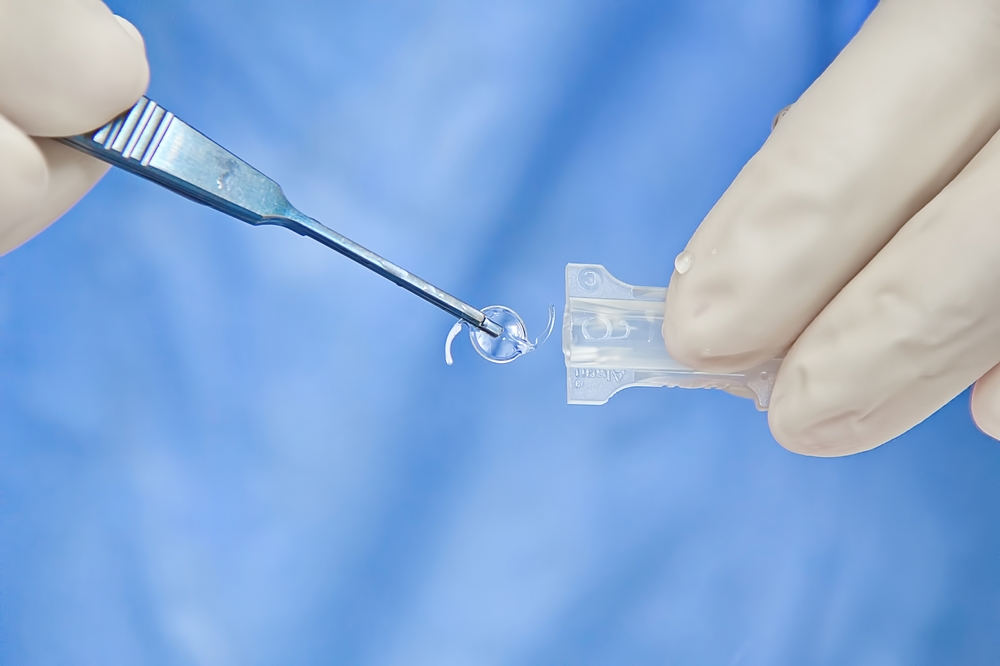
If you’re considering cataract surgery, it’s essential to understand your options. At Bochner Eye Institute in Toronto, ON, we’ve been helping people improve their vision for more than 95 years. Led by Medical Director Dr. Raymond Stein, who has performed cataract surgery for over 30 years, we combine experience with cutting-edge technology, offering traditional cataract surgery and advanced laser cataract removal.
But, what’s the difference between them? Read on on find out.
How Traditional Cataract Surgery Works
Traditional cataract surgery uses handheld tools. After applying numbing drops, the surgeon creates a small incision in your eye with a blade. A thin probe is inserted to break apart the cloudy lens using ultrasound energy, which vibrates more than 20,000 times per minute.
After the lens is broken up, the fragments are gently removed, and a clear artificial lens is inserted to restore vision. The incision is often self-sealing, so stitches are usually not needed. While reliable, this technique relies heavily on manual skill and can result in a longer healing period.
How Laser Cataract Surgery Works
We were the first eye care centre in Canada to offer laser cataract surgery using the Catalys femtosecond laser system. Laser cataract surgery enhances the process with advanced precision and safety. Using this advanced laser system, we begin by capturing a detailed 3D image of your eye. This imaging is more detailed than an MRI, providing a highly specific blueprint for your surgeon to follow.
This allows us to tailor the procedure exactly to your eye’s shape. The laser creates a precise round opening in the lens capsule and gently softens the cataract without the need for ultrasonic energy. Unlike ultrasound, which shakes the tissue rapidly to break it up, the laser breaks it into tiny pieces (segmentation) that your surgeon removes. This reduces trauma and inflammation in the eye.
Your surgeon then places the artificial lens using accurate imaging guidance.
Recovery Differences Between Laser and Traditional Cataract Surgery
Recovery from both procedures is typically smooth, but there are important differences. After traditional cataract surgery, your vision may take a few days to sharpen. Some people experience temporary blurry vision, mild discomfort, or sensitivity to light. Due to the use of ultrasound energy, inflammation is more likely to occur, which can slow down the healing process.
With laser cataract surgery, healing may occur more quickly. The precise laser incisions and reduced energy inside the eye result in less swelling and irritation. Many patients notice clearer vision sooner and return to regular activities faster. A smoother recovery can be a significant benefit for individuals seeking rapid results with minimal side effects.
Cataract Surgery in Toronto, ON
At Bochner Eye Institute, we use the latest tools to give you personalized, precise cataract surgery. With decades of experience and a focus on innovation, we’re here to help you see better, faster, and more comfortably. Call 416-960-2020 in Toronto, ON, to schedule your cataract surgery consultation.